

What if you were in control of your media?
We're not just creating content. We're creating a Network.
What Is Decentralized Media?
What if, and just hear me out on this, what if your media belonged to you?
That’s the question I’ve spent the past year attempting to answer.
Because we haven't had access to our media in a really long time, maybe not ever. Social media was supposed to accomplish a democratization of information. That kind of happened, but not really. Instead, we created an entirely different class system.
Content creators produce content and information. Thought leaders produce thoughts and information. Independent journalism exists, but unless it’s privately monetized, it’s still dependent on a what is known as a vector.
These are the platforms on which information lives, like Twitter, Facebook, and Substack.
Some of them are doing this much better than others.
But the ways in which this information is transmitted means that while copyright belongs to you, how people interact with your information belongs to the vectors. You don't have control over that.
So, I've spent the past year building the ability to create media that is wholly yours (although I am also still reliant on those vectors—for now).

When I talk about distributed media, I mean that we take your media and distribute it to as many channels as possible: YouTube, Facebook, Substack, Twitter, and Instagram. We host the media with as many vectors as possible to spread or disseminate as much information as possible. That's distributed media.
But when it comes to decentralization, it's about who owns your media.
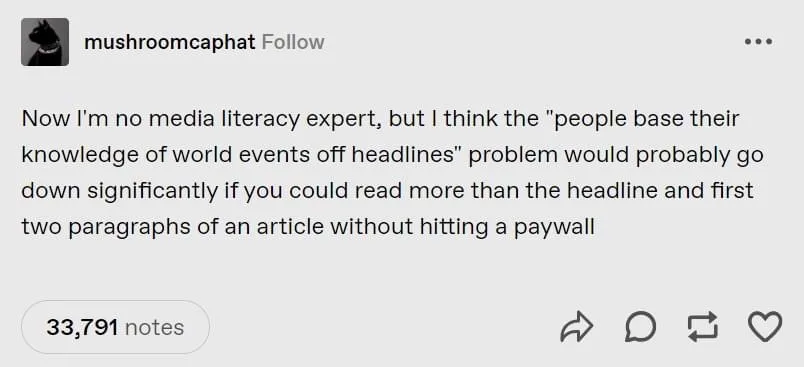
With traditional media sources like cable news, print news, and even online news aggregators, you're almost always looking at a vector of information where people contribute pieces of the greater whole.
So, if I'm a writer for the New York Times, I'm publishing my stories under the vector of New York Times media.
That article might be published online, printed in the paper, or go in the Sunday magazine. There are some options, but at the end of the day, everyone still has to pay the New York Times a nominal fee to access this information.
And that's a problem if we actually want democratization of our information.
That's why, when we talk about decentralization, it's about the information living in as many places as possible.

Decentralized social media, like Mastodon or Blue Sky, use something called an ActivityPub Protocol, that allows you to publish the same thing in multiple places.
Even Meta is making strides toward implementing the same protocol on Threads.
This is decentralization in action.
However, when it comes to media, the current model is fundamentally flawed.
This is because we rely on organizations whose primary purpose is to make money in order to fund the media and disseminate it as widely as possible.
This has always been how media has worked in the past, but it will not work that way moving forward.
We’ve seen major media publications die slow deaths over the last decade.
And if we continue to gatekeep information, we will ultimately be creating an information class, which could have many negative consequences.
We’re already beginning to see them—extreme polarization, disinformation campaigns, and rampant propaganda.
At the Neurodiversity Media Network, we have built a framework for decentralized media.
Currently, I am a one-person operation with a small but growing cohort of dedicated supporters. This means that I cannot currently build the vector myself, and therefore primarily use Substack to host all of our media. However, the platform is just one aspect of the idea; the deeper concept revolves around who owns your media and information.
The answer is: you do.
When we create a masterclass or workshop at the NMN, we are creating content that belongs to you and can live on beyond its fleeting social media appearances. We create video interviews or interview series, and then you get access to all of the assets: video, audio, transcript, short-form video and written snippets, and templates for publishing. The goal is for you to disseminate your information to as many places as possible.
As a creator, you should be able to repurpose the content. For example, turning interviews into blogs, classes, or even books. The whole point is for you to use your media in the way you want and for people to have access to it in as many ways as possible.
Decentralized media also means that it doesn't have a centralized home.
I've built one for convenience, allowing you to subscribe and receive an email every single time we publish new content. The goal, however, is for my audience to access that content wherever they want.
Our goal here is accessibility.
And we won’t be the only ones.
That's also the point. The point of decentralized media is to make the media belong to its creators. So that we can remove the vectors of information that are preventing you from having access.
The more you control your access, the more you control your destiny.
If you would like to join us in building this future, we would love to have you.
want to be a part of the network?
Become a contributor.

Copyright 2021 - Privacy Policy